Case Study: https://www.youtube.com/watch?v=5dHPP4x5vJ8
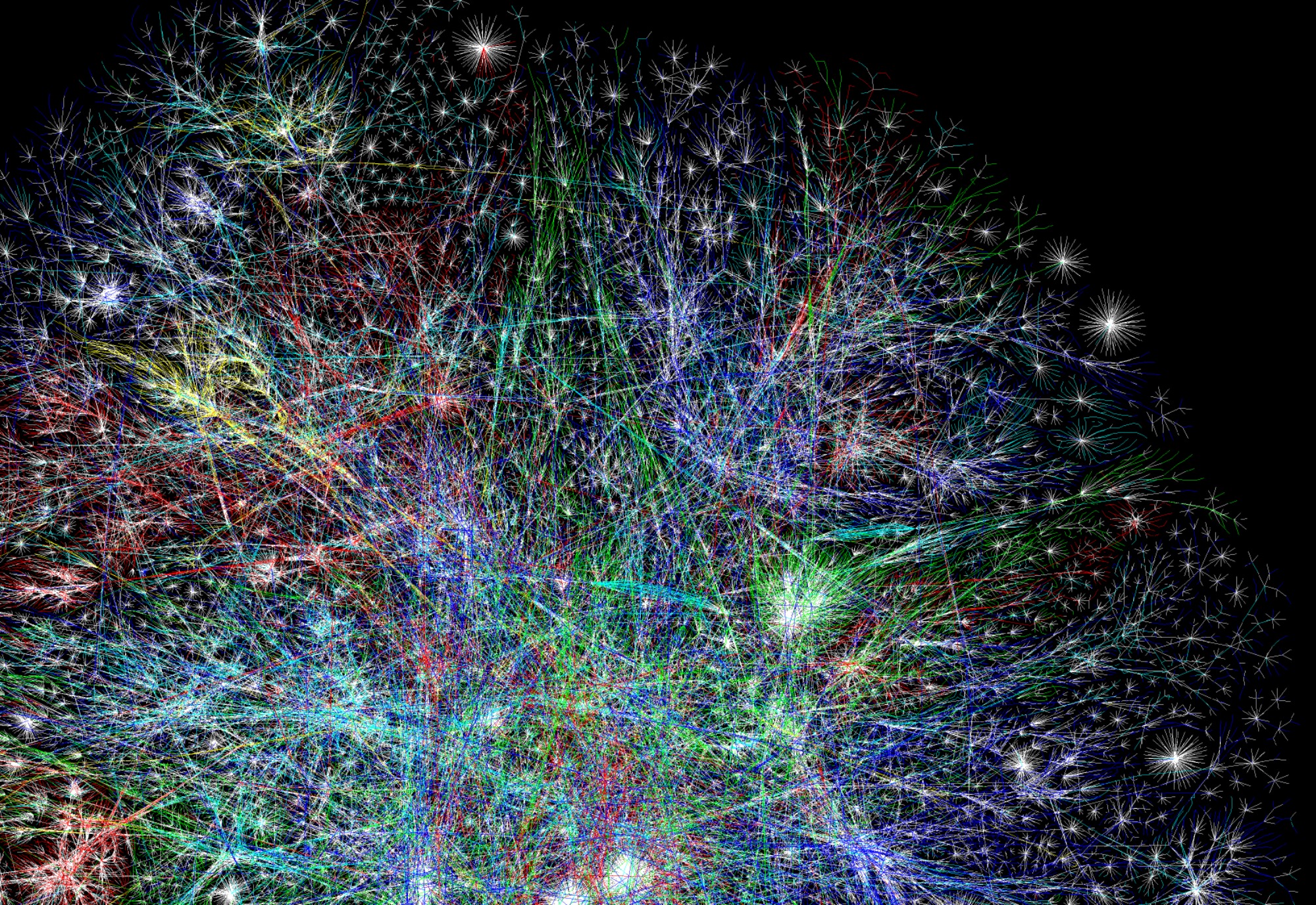

This analysis shall be exploring Marshall McLuhan’s proposition of ‘Extension and Amputation’ in regards to new media platforms. Using the Internet as a topic, and social media as a subtopic within the Internet, I aim to highlight the presence of amputation and extension within this digital technology platform. I shall also critique McLuhan’s theory and concept of ‘Extension and Amputation’. The digital media has majorly contributed towards the construction of ideological meaning and control within audiences. The Internet has provided itself as a tool, which can be used in various ways. Using my group, ‘Team SEEL’s’ video as a case study, I shall focus on the consumption of texts in regards to the Internet, as well as making comparisons to the television.
Team SEEL’s video focused on creating awkward situations in public. Using Lasswell’s model of communication, which states that every text entails ‘who, says what, in what channel, to whom, with what effect’. This video had youths and young people as the ‘who’. Young participants reacted positively to this experiment, as a result of individuals from their demographic being involved. Our ‘says what’ entailed the essential message, which was the reaction of the public to awkward situations. YouTube via the World Wide Web (Internet) was used as a channel and medium for audiences. My group selected this platform because it allows a wider range of audiences to be reached. The video beleaguered the general public, as various reactions were needed for its narrative. It was made to entertain audiences, as well as enlighten them on societal reactions and responses to given scenarios.

Using the Internet as a digital technology platform, Team SEEL was able to achieve its aim at representing representations to the society. McLuhan (1964: 7) explains that a machine does not create meaning, but what we do with it does. It was not just the fact that our group blew bubbles in public that led to our given reactions, but that the use of a camera was employed, and affected the construction of meaning. Theall (1971: 209-210) criticises McLuhan’s assumption that the media influences everybody in the same way. I disagree with McLuhan as well, because ideology and personal preference play a role in the dynamic process of denotation by audiences. The ideology within the different groups; youth and adults, male and females participants in the video contrasted, which resulted in different reactions from both groups.
It can be said that the Internet is an extension of communication. Lievrouw states that the rise of new media has led to shifts within communication (2011: 222). This is because; it makes connection with other people easier and more efficient. The society no longer requires homes or public facilities to keep in touch with people; it can now be done from anywhere. One could argue that the telephone already served this purpose, but the Internet provides more facilities that ease communication. The invention of social media; a product of the Internet, led to the creation of platforms like ‘Facebook’, ‘Skype’, ‘YouTube’, ‘Whatsapp’ and ‘Snapchat’, whereby people are not only able to communicate, but connect with their friends and share content amongst themselves, whilst accessing a global audience. YouTube via the Internet was useful in sharing my group’s video with an extensive audience.

Audiences are aware of the fact that digital technology can influence them, but choose to ‘dance according to the rhythm’ of this platform. They are more interested in the benefits that can be consumed out of the medium rather than the effects it might leave on them. McLuhan acknowledges that ‘with the new media, however it is also possible to store and to translate everything (1964: 64)’. With that being said, it is possible for viewers of my group’s video to hypothesize that blowing bubbles in public, in the faces of strangers is acceptable, which might not always be the case.
YouTube via the Internet has created a dynamic space for young people in particular, to come under the ‘spotlight’ and temporarily act as media producers with a global audience awaiting them. Perhaps, one could argue that the fate of ideological construction within audiences lies in the palms of upcoming unprofessional producers with smartphones in their pockets. McLuhan makes note of a rather interesting fact, he says ‘perhaps the most obvious “closure” or psychic consequence of any new technology is just the demand for it (1964: 74)’. I strongly agree with his proposition. Using myself, a vast social and open media consumer as an example, I can state that I often demand to use online platforms, and without them, my life would be different. In other words, although the Internet extends by providing entertaining content, it also amputates by altering ideologies and perceptions of audiences.
The Internet has created freedom amongst media audiences. They can now create and construct what they choose to watch and listen to. Marshall states that ‘Media culture is no longer schedule-led, nor even necessarily organised by conventional genres, given that individual users can customise the music/media categories within their ‘libraries’ (2006: 637 in Hills 2009: 113)’. This new development has led to satisfaction within media consumers like myself. The emergence of the Internet as a new and digital platform has taken the spotlight away from television. As a result of this, many individuals would rather watch their favourite programmes online, than on the television. This has been due to the convenient nature of the Internet, whereby people are able to access these services on smaller devices such as mobile phones, ‘i-Pads’ and laptops.
Technology has been seen as the way forward by the society. This can be explained by the reaction of the public to the awkward situation created by Team SEEL. People were more comfortable with the fact that I had a camera, than they were by the bubbles. It can be argued that, this was as a result of the fact that we now live in the digital age, where people have their smartphones and other digital devices, where individuals are not consumers of the media but producers as well, through citizen journalism and social media. Before the advent of the digital media, and the reign of television, it would be rare to capture viral content. The digital media has created a means for people to interrupt public spaces and broadcast content to wider audiences via the Internet.
Marshall McLuhan argues that the television is the medium that controls the environment (1967: 28). I oppose this proposition, stating that the Internet serves as a melting point for the public, and encourages communication via the social media. People read and follow things they see online. Previously, it can be said the newspaper and television had this influence, but the coming of the Internet created a situation of power imbalance between old and new media platforms. In other words, the society would rather use public ‘wifi’ in surfing the Internet than watching the television, listening to the radio or purchasing a newspaper. In the modern day, people are stuck behind their phone screens and face-to-face communication has been less. This has been a result of the influence of the social media on communication. It can be argued that television provided a platform for people to unite, while the Internet has diverted people away from each other. This is because of the intimate nature of its hosts, such as mobile phones and tablets; devices customised for privacy and the use of one person.
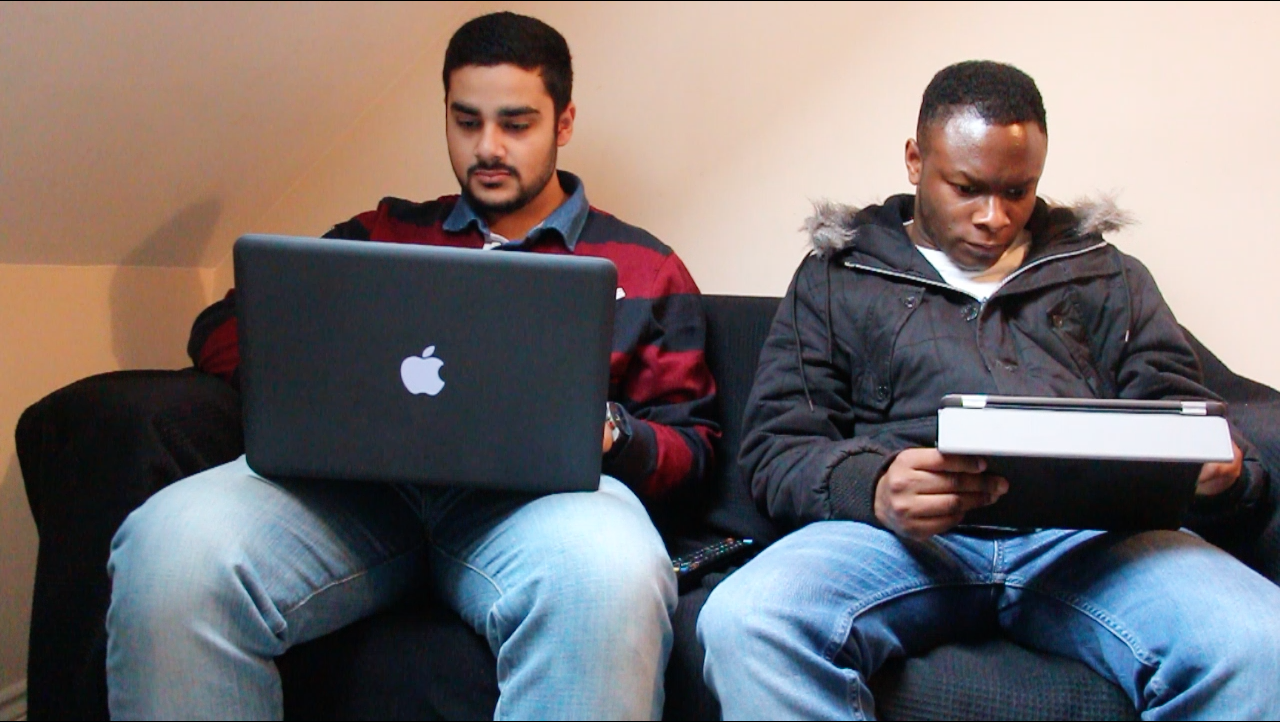
For students, the Internet has served as an extension of the mind. Rather than creating personal ideas for research, many students would briefly surf the Internet for things that have been used in the past. The convenient nature of the Internet is its most outstanding feature in my opinion. Compared to the television where most videos have to be carefully and professionally produced, the Internet provides ‘the best of both worlds’, whereby people can either choose to access professional content via services like ‘BBC iPlayer’ or download texts from torrent sites. I would argue that books are reflections of the mind. This is because it involves an author carefully constructing content for his or her own personal perspective to readers. The Internet on the other hand is an extension of the mind, as well as a more stable platform of communication transmission, as there are more avenues to express opinions than writing. The Internet provided a more reliable means for Team SEEL to express our ideas to our targeted audiences. It would have been much more difficult if we had to write about how the public would react to awkward situations, or make a professional video for airing on the television. This was not the case, as we understood that our platform, which was YouTube via the Internet, would not require professionalism as a compulsory criterion. This made it easier to work according to the narrative and express our motives.
Due to the growth of the Internet, an increasing number of television shows have created social media accounts for the purpose of reaching audiences. This proves the relevance of the digital media, and it’s dominance over other forms of media. This platform has presented itself as a powerful and effective medium of reaching audiences. In order to reach targeted audiences effectively, my group focused on sharing our text across various social media platforms such as: Facebook, Twitter, Whatsapp and Instagram.
Although I agree with Baym’s claim that, people express emotions, enjoy and strengthen social structures via text-only media (2010:59), it is evident that the Internet has also led to amputations within its users. Although it enhances communication via social media, one cannot dispute the fact that it drifts people apart. Modern day individuals think it is more appropriate to send messages to people online, rather than establishing face-to-face interactions. Unlike the Internet, ‘television’ provided a stage for families and friends to view it together. It has created less interaction between people. Perhaps, if I could directly interact with my video’s audience, I would fully understand their reaction. The emotions and feelings between two parties cannot be fully understood and transmitted online; therefore people often experience conflicts and misunderstanding online.

The Internet has led to lack of privacy. On social media sites, personal information is exposed to the public. This could in turn endanger the users of these sites. Team SEEL’s video featured only the names of participants and excluded personal information. Although we felt the necessity to identify ourselves, we decided not to display contact information in order to respect our privacy. Unlike the television, new media consumers often expect producers to leave contact details alongside their texts. The Internet has led to people having greater expectations.
Social media works through different mediums to construct ideological meaning and control of audiences. McLuhan and Powers state that ‘When Media act together they can so change our consciousness as to create whole new universes of psychic meaning. (1989: 87). Social media provides a platform for people to advertise their identities and lifestyles; audiences in turn construct this connation in different manners. Texts can be interpreted into different meanings, depending on the context in which audiences view them (Ang 1989: 99).
A stage like Twitter presents audiences with ‘tweets’, whereby you are presented with a question when you log in: ‘what’s happening’. This encourages people to share current activities in their lives with strangers. Facebook on the other hand asks a question on their homepage, ‘what’s on your mind’. While Twitter offers the opportunity of sharing current activities, the latter focuses on reflecting things on your mind, ranging from likes, to issues and to opinions. All of these details are now packaged in a different format and uploaded to a platform called Instagram. Whereby, people are presented with the opportunity of visually showing their likes, opinions and lifestyles to wide audiences. This makes one ponder whom might be viewing personal content, which another person willingly decides to put on. Applications like YouTube and Snapchat, not only provide a means of users stating things they like, but filming them as well. It can be said that before the advent of the new media, most people would not have imagined that a platform aimed at showcasing personal interests would emerge with the society taking part in it. It would have been hard to imagine that the writer of this analysis was active on Snapchat whilst writing. This just goes to show how deep the urge for social media has pierced into the society. More platforms keep emerging with linked agendas of revealing personal activities to audiences. At the end of the day, people do not realise how much information they have shared with the social media. No other form of media has this ability of extracting vast information from its users like social media. While this platform might extend communication and serve as an instrument of broadcast to the globe, it also amputates the privacy of its users and creates an avenue of capitalism and exploitation for advertising by social media institutions.

Representation within social media has contributed to its speedy growth. Consumers can now identify programmes that represent them fairly tune into them. Unlike the television, the Internet via social media targets audiences according to their preferred demographic. Facebook for example displays recommended pages based on the likes and interests of its users. People now feel the urge to belong to various online media platforms because they feel represented.
Identities are now vast and diverse. They now differ according to various social, historical, religious and sexual demographic. Unlike the television, the Internet provides a platform where diverse representations could now possibly be represented fairly. Kellner argues that ‘In modernity, identity becomes more mobile, multiple, personal, self-reflexive, and subject to change and innovation (1995: 231)’.
YouTube has viral and entertaining content that young people would be attracted to. This knowledge helped in targeting my group’s video to a predominantly young audience. The complex outcomes of new media are how they are represented, sold and packaged (Lister, Dovey, Giddings, Grant and Kelly 2003: 177). My group’s video tried to represent a wide audience in order to gain viewers from various demographics.
The modern day society enjoys watching viral content. This can be seen as a handful of professional videos online have fewer views than the viral ones. The public have turned to the Internet for these videos because television does not provide enough of this content. With this in mind, Team SEEL aimed at creating a viral video in order to attract audiences. The introduction of YouTube to the public has created a wide spread epidemic of viral videos across various social media platforms. These videos are often unprofessional in nature and entail an interesting narrative. With the help of the social media, they gain even more fame and demand. Using McLuhan’s proposition of extension and amputation, it is safe to say that although viral videos provide entertainment to audiences, it sometimes involves content seen to be morally inappropriate. For example, the interview of Charles Ramsey was found funny and went viral as a result (https://www.youtube.com/watch?v=nZcRU0Op5P4 ). On the other hand, a morally disturbing viral video of a dog being thrown off the roof became widely shared online.
Culture has been adopted into social media. Twitter allows its audience to engage in various activities that people within similar demographics might fancy. This enabled by group to target viewers by sharing its video using ‘hashtags’. This feature allows audiences to word towards keeping social media active, with fewer contributions from the institution. Social media is also influential in re-constructing the culture of its audience. Since it has participants on a global scale, anyone can now contribute to posts and share their perspectives on matters. Since unlike the television, social media comes raw and unedited, people are often affected more efficiently by texts, images and videos shared online. Raymond Williams states that the society entails forms and patterns of communication (Eldridge and Eldridge 1994: 99). Communication is essential and can be seen in all cultures. He also furthermore goes ahead to state that information central to individuals and the society are conveyed by the manner in which people communicate within institutions they keep in touch with (1989c: 23 in Ibid 1994: 99). If communication is essential in culture, that would mean that the way we communicate has the ability to influence our culture. Williams’ general theory of culture entails a ‘theory of relations between elements in a whole way of life’ (Ibid 1994: 45). Using Williams’ theory of culture, social media has extended and amputated culture by providing a platform for the society to interact, yet exposing cultures within given demographics to foreign societies, which leads its re-construction of ideological meaning and control.

The social media provides a space for people to share various ideologies to several other people. ‘A social network isn’t a neutral space. It is designed for a purpose, and that purpose is ideological (Pantland 2014)’. Social media presents people with the ideology that they need to be part of their sites in order to connect with other people. In reality, we would not need a technological device to connect with people. The natural process of physical interaction overrules the idea of Facebook needed to bring people together. Social media provides audiences with the opportunity of re-constructing themselves and their personal image. On Facebook for example, somebody might decide to sue an old picture from several years ago as his or her display photograph. What this does to strangers is create a false image of that person in their minds.
This analysis explored Marshall McLuhan’s proposition of ‘Extension and Amputation’ in connection to new media platforms. I used the Internet as a topic and social media as a subtopic. Although the Internet has extended communication and made it more convenient, it has led to the amputation of its users, by making them too reliant on it. It has created a means for people to interrupt public spheres and diverse contents to audiences. The Internet has proved itself to be a strong force to be reckoned with, within the media. Team SEEL’s video was used as a case study and reference point in my analysis of extension and amputation within digital media platforms. The existence of the Internet has created several effects on its users.
Bibliography
Ang, I. (1989) Remote Control: Television, Audiences, and Cultural Power. (ed.) By Seiter, E., Borchers, H., Kreutzner, G., Warth, E. London: Routledge.
Baym, N. (2010) Personal Connections in the Digital Age: Digital Media and Soceity Series. Cambridge: Polity Press.
Gossage, D. (1967) McLuhan: Hot and Cool. (ed.) By Stearn, G. Victoria: Penguin Books.
Hills, M. (2009) Digital Cultures: Understanding New Media. (ed.) By Creeber, G., Martin, R. Berkshire: Open University Press.
Lievrouw, L. (2011) Alternate and Activist New Media: Digital Media and Society Series. Cambridge: Polity Press.
Lister, M., Dovey, J., Giddings, S., Grant, I., Kelly K. (2003) New Media: A Critical Introduction. 2nd Edn. Abingdon: Routledge
McLuhan, M., Powers, B. (1989) The Global Village. New York: Oxford University Press.
McLuhan, M. (1964) Understanding Media: The Extensions of Man. London: Routledge.
Kellner, D. (1995) Media Culture: Cultural Studies, Identity and Politics between the Modern and the Postmodern. London: Routledge
Theall, D. (1971) The Medium Is The Rear View: Understanding McLuhan. Montreal: McGill-Queen’s University Press.
Walton, P. (2014) ‘Every Social Network has an Ideology’. Union Solidarity International [online].
Available from: https://usilive.org/every-social-network-has-an-ideology/ [4 Dec 14].
Eldridge, J., Eldridge, L. (1994) Raymond Williams: Making Connections. London: Routledge.


 Emmanuel Johnson