Working on my #Happiness project overtime has provided me with some clarity and insight overtime. Since my project is vastly broad, I’ve had to put in a lot of time, effort and research into narrowing down and producing something interesting still.
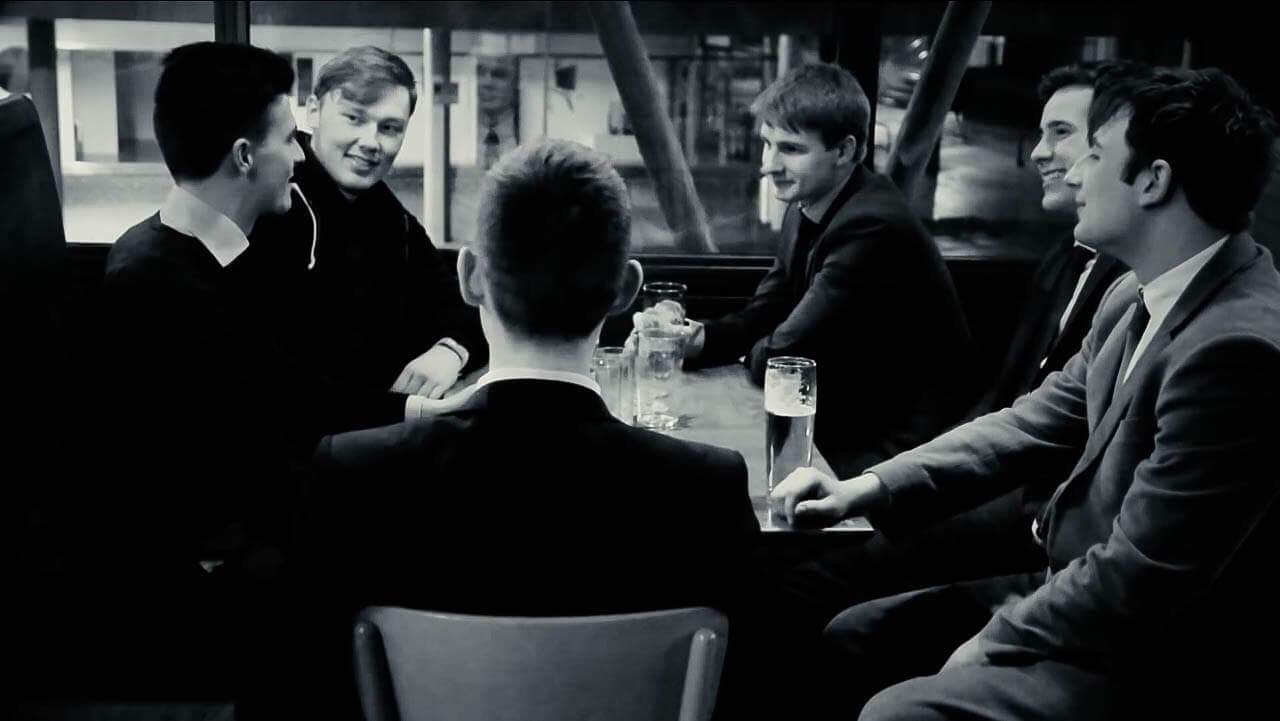
I brought a group of thinkers together last week to discuss ‘Happiness’. Together, we looked at its construction, meaning and position within society. This helped broaden my horizon, and enabled me think about other aspects of this topic that I hadn’t thought of in the past.
At the moment, I am looking at researching into the construction of Happiness within Urban Culture.
Within this project, I aim to create a space where people would be able to rethink their positions in the world, and maybe view life, practises and interests in a new light.
So why Urban Culture? I am fascinated by the energy, excitement and discovery that it brings. These are elements which I personally associate with Happiness.
I look around and see people living carefree. I speak to them and discuss their interests and experiences. I notice diversity, and am excited by the distinction gained from their respective lives. I am intrigued by the difference within Urban Culture and how these seemingly different characteristics come together under a common umbrella.
I intend to create a documentary about it. At the moment, I am using the Netflix documentary; Hip-Hop Evolution as a reference for the future. I aim to imitate its montage and style of production.
Within this narrowing down process, I am questioning: ‘what is this mutual form of happiness and understanding that connects these individuals with each other, and how is it created?’. I am also looking to discover whether or not there is a form of happiness to start with.
Looking at the relevance of this subculture within society, I have noticed its tentacles spread across all aspects of society. There is a reason why Hilary Clinton attempted to dab during her electoral campaign, and furthermore got Jay Z and Beyonce to back her in her campaign. These acts highlight the importance of Urban Culture within society, and why ‘elite’ members of the society would go out of their way to identify with the ‘ordinary’, and their practises.
As this Sub-Culture itself is diverse, my main focus shall be centred around its music scene. This medium acts as a major agent in the spread of this culture, and propagates the practises and beliefs within. Nevertheless, I aim to throw myself into the field of Urban Culture by being part of its gatherings. This will provide myself with more perspective into its ethos and lifestyle.
My position within this research has never been stagnant, but progressive, as I started off wanting to work on Depression, to ‘Happiness’, and now Happiness within Urban Culture. I expect even bigger changes within upcoming weeks, as I am still researching, speaking to people and seeking visual references.
I applied for this course in hopes of discovering myself in a more informed and refined manner. I believe the ethos of the course and the content within it, help me rethink my actions, lifestyle, ideology and practises. It makes me question my position in this world and understand it on a different level.
Before starting this course, my interests lied primarily within the field of Media Production. I have been able to expand upon this interest and think about the current digital world that I live in. Although already being exposed to discourse within the digital age from undergraduate studies, I have learnt to think a lot more critically about the happenings within society, that reflect what the future might hold for us all.
Sharing a classroom with people who represent an international background has given me the opportunity to not only learn about transnational subjectivities, but experience them for myself whilst working in groups with other people. As a result, I have been introduced to the idea that, although all spaces in this world differ from each other, we are actually more alike than I previously thought.
This has altered my perception and denotation of ideologies. As I now look to work on the topic of happiness, I have at the back of my mind that, the experiences of somebody else in a far away country is actually similar to mine in England.
I am at a very early stage of my research. I aim to critique the construction of happiness and question its position within postmodern society. Concepts such as ‘the spiritual death’ learnt from Exploring Digital Cultures shall come in useful in my research. It shares a heavy correlation with ‘happiness’ and what it truly represents.
This is a project that I really care about and find interesting. I also believe it could be useful in future for both Academics and Non-Academics. My research findings are still very unclear to me. This adds to the thrills and excitement of the project.
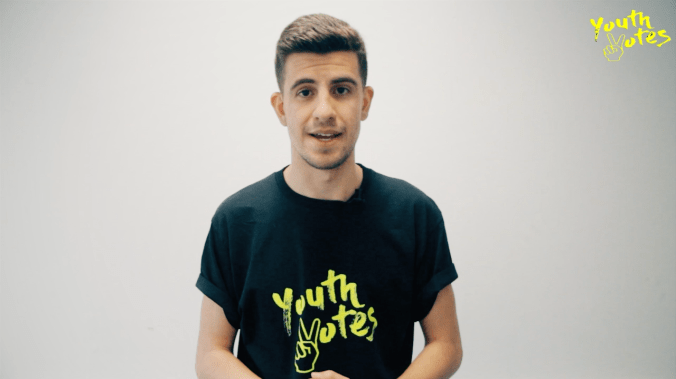
In this video, The Youth Vote founder, Alex Cairns discusses his plans for the future and encourages young people to vote in the upcoming general election.
I started off the year wanting to work on Depression, because of my experience living with it last year. I tried to narrow it down to something very specific and not just ‘Depression’, so I looked at it from the perspective of the 21st century society, and the pressures it has produced.
I produced a short film this month, titled ‘The 21st Century Pursuit of Happiness’, and this influenced my shift greatly. I feel like I have been focusing on a problem for too long and not addressing something I find much bigger. I have now watched my focus transition from Depression towards happiness.
Although this idea is only just taking a shape of some sort, it is a burden that has been repressed in my mind for about 2 years now.
In 2015, I undertook ‘a search of meaning’. It was a period where I decided to cut down my use of social media, wander into unfamiliar territories and reflect truly on things which kept me up at night. I undertook several bus journeys at night – looking at street lights, listening to music and engaging myself in critical thought. This was the birth of it all.
I am intrigued by the concept of happiness, its construction, meaning and the agency of individuals who identify as happy or unhappy.
I would like to discover what this thing called happiness really is and how it is constructed in current modern society. I need answers.
This is something I truly care about, something that takes away my peace of mind, something I strongly believe I need to resolute.
Although I thought I left this in 2015, I have realised that, it never really left. This is because, it has been present with me all long. Starting a Master’s degree this year, I discovered new issues, feelings and emotions around me that I was unaware of in the past. Things I never thought I would come across at this point in time. They all lead back to the same destination I left behind in 2015. My search of meaning.
Moving forward, I am at a very early stage of this research with over-inflated thoughts and ideas. I now aim to break them down into smaller and understandable bits.
Society expresses itself in collective groups, which allow for individuals to interact with each other, develop relationships, share experiences and thus create meaning. This is the realisation of communities.
Nonetheless, an online community acts as a two-edged sword. It is an umbrella for healthy communication, and a platform which invades privacy (Preece 2001: 8). This society consists of individuals who share the job of producers, consumers and prosumers. It is a space of fantasy where terms and conditions (values and norms) of ‘real life’ become secondary.
I shall be writing on the theme of Online Community in close relationship with the Social Media site, BIGO Live. I aim to shed light on what it means to be part of an online community, how it is formulated, and the identity and collective meaning which shape the experiences of its users.
Before I get Old: What it means to be part of an Online Community
Source: Standing on Giants
The online community flaunts a young and vibrant group of individuals who feel the need to depict their lives as exciting, to appear young, trendy and ‘cool’. The modernist perspective perceives the other as something or someone who reflects a different perspective from the viewer (Young 1999: 5). Just as the name; Before I Get Old (BIGO) implies, an online community is constituted of individuals who assemble under the banner of youthfulness, and use it as a medium of sharing experiences and developing relationships. To be young is to abstain from things which ‘old’ people would do, such as living life with caution and being fully aware of the consequences of their actions. BIGO, as an online community promotes the ideas of living life to the fullest and being obsessed with yourself.
BIGO Live invites individuals into the lifestyle of narcissism, with the promise of fame in return (BIGO Technology PTE LTD 2017). The online community entails the commodification of communication. The practise of inviting individuals to partake of the ‘glorious’ act, which is human interaction, in return for a youthful and vibrant life online. Ferreday (in Karatzogianni and Kuntsman 2012: 80) claims that, ‘the digital has become a site of struggle over what constitutes reality’. The online community acts as a sweet escape from the troubles of the real world. An unrealistic virtual space where desires and fantasies are performed.
How is an Online Community formulated?
Online communities are created because of togetherness felt by a group of individuals, due to the mutuality of their beliefs and interests. Ritzer (2007: 36 – 40) discusses the ‘Something-Nothing Continuum’. He argues that, the social world is comprised of the combination of ‘nothing’ and ‘something’. He furthermore defines something as a social practise that is generally produced, controlled and somewhat rich in distinctive significant content. He describes nothing as somewhat lacking in content. Ferreday (2011: 25) describes community as ‘a process’.
Online communities undergo a procedure, which features the production of content that reflects significant meaning, and others that do not. It goes back and forth, and shapes our overall understanding of this community, as a digital reflection of the social world.
Everything that happens within this space usually expresses the singular concept; Something-Nothing Continuum. Within BIGO live, certain users within this online community use this platform as a stage for the expression of matters, which they find meaningful within society, such as postmodern political occurrences and the straining placed on the public as an aftermath of them. This performance of ‘something’ formulates this online community as an educational sphere, which allows for meaningful and positive interaction on things that matter, within a global scale. Nevertheless, online communities are mostly comprised of nothing; issues and topics which stem from matters of negative and less meaningful subjects. This aspect of the online community features the phase of self-realisation; the realisation that, we as individuals derive pleasure from subversive and socially unacceptable themes such as pornography. The sensual drive that accompanies the human flesh may have located its daring partner, digital technology (Nguyen and Alexander in Shields 1996: 117). This leads us to the discovery of the chaotic identity, which characterises the nature of online communities, and the experiences faced by its participants.
Identity and Meaning in Online Communities
Source: Brand Networks
The coming of online communities has endorsed the expression of selves. These include selves that:
We do not want to be
We Pretend to be
Society expects us to be
We desire to be (Ideal selves)
Miller (2011: 161) highlights that ‘identities are not unified, solid or stable, but maintained, changeable and often contradictory’. The combination of multiple selves, give birth to complex or chaotic identities which are exhibited within several online communities, including BIGO Live.
Whenever I log into this site, I experience a struggle in picking the most suitable identity to express in given situations. I tend to be a different self to a single individual, compared to who I am during live sessions with thousands of viewers from across the globe. Whilst speaking to them, I express my most ideal self. During one-on-one live sessions, I put on a false self, the one I pretend to be. It should therefore the noted that, online spaces of communication are made up of invented identities (Kirby 2009: 106).
The introduction of these virtual communities has in more ways than one, affected our lives. It creates and strengthens relationships of work and social life. Business owners and individuals with talents to show the world, use these communities to showcase and sell their services and products to those who can relate it to their lives, while on the other hand creating a blur where there seems to be no difference between work and play life. This creates the illusion of an ‘authentic life’ (Harris 2004: 127 – 128). ‘The authentic self’ portrays a life of freedom online, to embody any and everything I desire.
Conclusion
Source: Insightrix Communities
The expression of the individual is an unavoidable element within society. Online communities have propagated ‘the sharing of common meanings, and thence common activities and purposes; the offering, reception and comparison of new meanings’ (Williams 1961: 10).
I have used BIGO Live as an ideal online community, which allows for users to construct identities as they wish. This platform acts as a mouldable medium, which commits itself into the hands of its consumers, and allows for us to use it as we please. It also invites individuals to express fantasies and desires, and forget about reality for a moment.
Ferreday, D (2011) Online Belongings: Fantasy, Affect and Web Communities. Peter Lang: Oxford.
Harris, A. (2004) Next Wave Cultures: Feminism, Subcultures, Activism. Routledge: New York.
Karatzogianni, A., Kuntsman, A. (2012) Digital Cultures and the Politics of Emotion: Feelings, Affect and Technological Change. PALGRAVE MACMILLAN: Basingstoke.
Kirby, A. (2009) Digimodernism: How New Technologies Dismantle the Postmodern and Reconfigure Our Culture. The Continuum International Publishing Group Inc: New York.
Miller, V. (2011) Understanding Digital Culture. SAGE Publications: London.
Preece, J. (2000) Online Communities: Designing Usability, Supporting Sociability. John Wiley & Sons, Ltd: Chichester.
Ritzer, G. (2007) The Globalization of Nothing 2. Pine Forge Press: California.
Sheilds, R. (1996) Cultures of Internet: Virtual Spaces, Real Histories, Living Bodies. SAGE Publications: London.
Young, J. (1999) The Exclusive Society: Social Exclusion, Crime and Difference in Late Modernity. SAGE Publications Limited: London.
Williams, R. (1961) The Long Revolution. Broad View Press: Toronto.
I promised to write to you again after completing my undergraduate studies. I am glad to let you know that, despite all the difficulties you faced with your Final Project, you still managed to achieve a 2-1 overall, which was quite good. You also graduated with all of your friends, who were with you during all of the stressful periods of university. That was amazing!
2016 was a life-changing year for you. You finally experienced international research in Milan. This changed your outlook on life and furthermore deepened your desire for further international exposure.
You had some very low moments in the year due to frustrations faced with job seeking, and the depression that followed afterwards.
I’m glad to let you know it was a blessing in disguise, because you learnt to get out of your comfort zone and start to demand more out of life.
Also, and very importantly, it encouraged you to pursue your Master’s degree in Communication, Culture and Media, with the help of a scholarship from Coventry University. This is a fantastic opportunity for you to construct your reality and mould whatever you desire into existence.
The only thing that matters at this moment is the present. It’s a new chapter with fresh experiences. I look forward to writing to you again next year!
 As this Sub-Culture itself is diverse, my main focus shall be centred around its music scene. This medium acts as a major agent in the spread of this culture, and propagates the practises and beliefs within. Nevertheless, I aim to throw myself into the field of Urban Culture by being part of its gatherings. This will provide myself with more perspective into its ethos and lifestyle.